
CRM
Sales pipeline stages for small teams: business states, not gut feel
Build a small sales pipeline around evidenced business states with a stage contract, four open states plus won/lost, safe return paths, tests and cohort metrics.
Short answer
A small sales pipeline should contain as few stages as possible and as many as necessary to steer genuinely different business states. An opportunity moves only when observable evidence supports the new stage—not because someone made a call, sent an email or feels that the deal is `warm`. A useful starting model has four open states: enquiry accepted, need and fit evidenced, solution and decision path clarified, and proposal under active consideration. A supported outcome follows: won or lost. Entry, exit, required data, owner, permitted return paths and automation boundaries are recorded in a stage contract for every stage.
Key takeaways
- A stage represents an evidenced business state; activity, next action, status and forecast remain separate information.
- Test four open states plus won and lost, adding a stage only when it produces a different decision, handover or measurement.
- Define entry and exit evidence, transition data, owner, return path, age threshold and automation boundary for every stage.
- Translate existing opportunities before reducing stages and measure conversion through entry cohorts rather than today's board snapshot.
A stage describes business state, not sentiment
Imagine a pipeline review. Three opportunities sit in `Working`, two in `Hot` and seven in `Follow-up`. Every deal has activities. Yet nobody can tell, without narrating the whole story, what the buyer has confirmed, which obstacle remains or why the case belongs in that column.
The board is not empty. Its meaning is unclear.
A pipeline stage answers: which verifiable business state is true now? The next action then answers: who does what by when?
`Warm`, `hot`, `in progress` and `follow up` describe judgement or work. `Meeting confirmed`, `decision path clarified` and `proposal delivered with an agreed response path` can be checked against an event and source. Good stages reduce the story that must be added verbally during every review.
Qualitative discussions in sales and CRM communities show both extremes. Some teams accumulate overlapping stages and required fields. Others keep silent deals open for months because a future return remains possible. Individual reports prove neither an ideal stage count nor a better forecast. They do provide useful edge cases: two trained people should assign the same case to the same stage without negotiating what the label means.
Keep contact, opportunity, stage and next action separate
Many pipeline problems begin before the stages are named. A contact is not yet an active sales case, a seller activity is not yet buyer progress and an open task is not yet a new stage.
Element | Question answered | Example | Do not confuse it with |
|---|---|---|---|
contact | Which person or organisation are we communicating with? | Anna Example at Sample Ltd | a specific proposal or project |
opportunity | Which individual commercial case are we pursuing? | Berlin site implementation | the entire customer relationship |
pipeline | Which shared process logic applies to this type of case? | new professional-services business | an arbitrary collection of open contacts |
stage | Which evidenced business state applies now? | proposal under active consideration | sentiment, task or forecast category |
status | Is the case open, won or lost? | open | the more specific business stage |
activity | What happened? | meeting held on 14 September | proof that the buyer progressed |
next action | Who does what by when and why? | Lea sends the requested evidence by Tuesday | the current pipeline stage |
forecast | Which amount enters which projection under which rule? | best case for Q4 | truth inferred automatically from a stage label |
One contact may simultaneously have a new-business opportunity, a later expansion and a service case. The stage therefore belongs to the specific business case. Otherwise, a call about one project may inadvertently move every other initiative associated with that person.
The stage test removes decorative columns
Before a column remains, it must pass five questions:
Which business state is true here that was not true in the previous stage?
Which observable evidence permits entry, and where is it stored?
Which different decision, work item, measurement or handover follows from that state?
Can two trained people classify the same test case independently in the same way?
Would merging this stage with its neighbour remove a material distinction?
If only colour, an internal activity or a wish for more detailed reporting remains, the stage is probably unnecessary. `First contact attempted`, `voicemail left` and `second email sent` may all be useful activities. They do not automatically create three different business states.
The reverse can also be true. One broad `Proposal` stage may be too coarse when the team must distinguish internally prepared, demonstrably delivered and actively reviewed by the correct decision group. The consequence of the state—not the number of columns—is what matters.
A starting model with four open stages plus an outcome
For a small professional-services or B2B team, the following model is a testable starting hypothesis. It must be adapted to the real sale.
Stage | What is now evidenced | Entry evidence | What is not yet claimed |
|---|---|---|---|
1. Enquiry accepted | a specific commercial case has been captured legitimately and accepted by an accountable person | source, request, opportunity ID, owner and a permitted next check or contact | need, budget or buying intent has not been confirmed |
2. Need and fit evidenced | the problem or desired outcome and basic offer fit are documented from a real exchange | meeting, reply or structured input with a source and open uncertainty | solution, price and decision have not been agreed |
3. Solution and decision path clarified | required solution, participants, criteria, missing evidence and next shared decision step are known | confirmed summary, participants and meeting or another traceable path | a proposal has not necessarily been delivered or accepted |
4. Proposal under active consideration | a specific proposal version has reached the right recipient and has a response path | delivery evidence plus recipient, version, review or decision date, or a confirmed blocker | silence is not a positive decision |
Won | the internally defined binding close evidence exists | for example enforceable acceptance, confirmed order or payment, depending on the business model | a verbal inclination or internally expected signature |
Lost | the sales case has been consciously ended and an appropriate reason recorded | rejection, lack of fit, displaced priority or documented close decision | that the person can never become relevant again |
The four open stages are not doctrine. A very simple sale may need only three open states. A regulated or multi-party purchase may require additional, clearly evidenced milestones. Add a stage only when it passes the stage test.
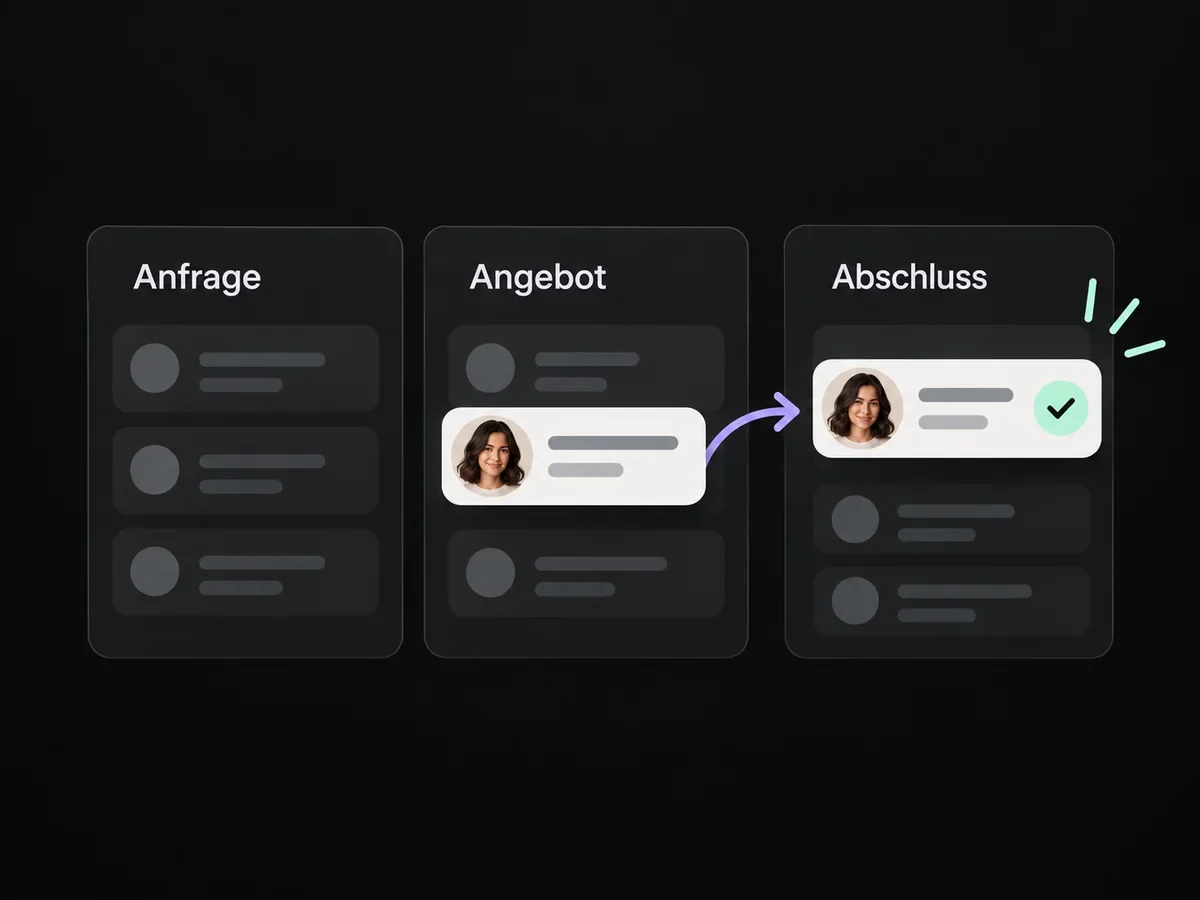
The stage contract makes every column auditable
A name is not enough. Sales and operations maintain a short contract for every stage.
Field | Content | Example for `Proposal under active consideration` |
|---|---|---|
business question | Which truth does the stage answer? | Has a specific proposal version reached the correct decision group, with a known response path? |
entry evidence | Which event or document is required? | delivery or portal receipt, recipient, version and agreed review point |
forward exit evidence | What must be true for the next stage? | binding close evidence |
backward exit evidence | When is the current state no longer valid? | scope changed materially; solution and decision path must be clarified again |
transition data | Which fields must genuinely be known now? | proposal ID, recipient, date, open blocker and next decision point |
owner | Who is accountable for correct classification? | exactly one authorised person |
permitted movements | Which destinations make business sense? | won, lost, back to solution clarified or visible review |
age threshold | When is the case reviewed rather than automatically contacted? | based on the confirmed decision date and sales cycle |
automation boundary | What may an unambiguous event trigger? | a task or internal review, not an invented buyer decision |
counterexample | What explicitly does not qualify? | PDF prepared internally but not delivered; email opened; seller expects a close |
Require data at the appropriate transition, not indiscriminately at creation. The team may not know the decision group or proposal version when the first enquiry arrives. Forced guesses make a board look complete while reducing its factual quality.
Entry and exit require evidence, not activity counts
A seller may make five calls without changing the business state. One unambiguous buyer reply may move the case immediately. Tie the stage to the result, not the volume of activity.
Event | Activity exists? | Supports a new stage? | Reason |
|---|---|---|---|
first outreach email sent | yes | no | no acceptance, need or shared step has been confirmed |
buyer describes the problem and desired outcome | yes | potentially stage 2 | source and basic fit must be traceable |
demo completed | yes | not automatically | completion says nothing by itself about criteria or decision path |
participants confirm criteria and next review | yes | potentially stage 3 | a shared decision path is evidenced |
proposal created internally | yes | no | the correct version has not demonstrably reached the buyer |
proposal delivered and review meeting confirmed | yes | potentially stage 4 | version, recipient and response path are evidenced |
email opened | yes | no | a technical signal is not a purchase or decision commitment |
binding order received | yes | won under the operating definition | close evidence must belong to the specific case |
Entry evidence should carry a source, timestamp and opportunity ID. Free text can add context, but a transition should not depend solely on a note that is difficult to locate later. When evidence is ambiguous, keep the case in its prior stage or move it to a visible review queue—not to the most convenient column.
`Waiting`, `no show`, `nurture` and `stale` are not automatically stages
These labels can matter, but they answer different questions from commercial progress.
Term | The real question | Better representation | When a separate pipeline may make sense |
|---|---|---|---|
waiting on customer | Who owes which event by when? | expectation or blocker field plus an internal review action | rarely; only with genuinely separate work logic and ownership |
no show | What happened to a confirmed appointment? | meeting outcome plus a recovery task | only when appointment recovery is a distinct process with its own team |
nurture | Is there no active sales case now, but a legitimate reason for later contact? | closed or paused case plus permission, reason and reactivation signal | for a clearly separate long-term programme, not as a forecast parking space |
stale | Has the stage crossed a configured inactivity threshold? | exception filter or review queue | normally not; inactivity is a review signal |
paused | Is there a named external date or blocker? | status or blocker plus review date and owner | only when pauses operate under different rules from active sales |
onboarding | Has the sale closed and delivery begun? | separate customer-journey or delivery pipeline | often, because the object, owner, deadlines and outcome change |
A deal that has been silent for months may retain commercial potential without belonging in the active sales forecast. `Lost`, `paused` and `nurture` are different decisions. The stage contract identifies the evidence required for a later return; the opportunity does not remain open on hope alone.
Forward, backward, terminal and reopened are four movements
A linear board must not pretend that every sale only moves to the right.
Movement | Required evidence | Example | Protection rule |
|---|---|---|---|
forward | prior exit and new entry criteria | decision path confirmed | retain timestamp and source |
backward | the prior business state is no longer true | scope changes materially after a proposal | record the reason and stop obsolete follow-up |
terminal | defined won or lost evidence | signed order or unambiguous rejection | do not leave status and stage contradictory |
reopened | a new relevant event after a terminal state | buyer starts a concrete new project later | decide whether a new opportunity is more accurate |
A backward move is not automatically poor sales performance. It can be the correct response to new information. What causes trouble is a movement without a reason or a data correction reported as a genuine buyer path. Mark `business regression` and `data correction` separately.
Won and lost are outcomes, not ordinary intermediate columns. A completed task, delivered proposal or positive tone must not automatically set won. On reopening, determine whether the same case continues or whether a new proposal, value and decision justify a new opportunity.
Use multiple pipelines only for materially different processes
A pipeline per person, lead source or campaign multiplies definitions and makes shared numbers difficult to compare. Filter fields often handle those distinctions better.
An additional pipeline is justified when at least three things differ materially:
a different business object and outcome;
different entry and exit evidence;
different owners or handovers;
different required data, deadlines or permissions;
different automation and failure paths;
different measurement logic.
New business, renewal and customer onboarding may therefore need separate pipelines. A Facebook enquiry and a website form do not automatically need different sales pipelines when both follow the same process after acceptance. Preserve their source in a dedicated field.
From real sales journeys to a tested stage model
From real sales journeys to a tested stage model
Collect milestones
Read won, lost and open cases; separate confirmed buyer and business events from seller activities.
Reduce stages
For every remaining stage, define the business question, entry, exit, required data, owner, return path and counterexample.
Map the inventory
Map old values to unambiguous targets; send ambiguous opportunities to an owned review with their possible destinations.
Evidence transitions
Test forward, backward, won, lost and reopened cases and read state, task and downstream work back from the target system.
Missing entry evidence, ambiguous old stage, several matching opportunities, unknown automation dependency or unconfirmed won/lost result?
Do not guess, move everything or contact externally. Preserve the old value, possible targets, evidence gap, current case and accountable reviewer.
Recommended flow: collect real milestones, write stage contracts, map existing cases safely and read every transition back in full.
1. Collect real milestones from cases
Take a bounded sample of recently won, lost and still-open opportunities. Record only evidenced state changes: what the buyer confirmed, which document existed, which decision point emerged and why the case ended. Capture internal activities alongside them without immediately turning them into stages.
2. Write stage contracts and reduce
Group equivalent milestones. For every remaining stage, write its business question, entry, exit, required data, owner, return path, age threshold and counterexample. Remove stages that create no different decision or are repeatedly confused in test cases.
3. Map existing opportunities safely
Create an old-to-new mapping table before changing data. Unambiguous cases receive a target stage. Ambiguous cases enter a review set with their old value, possible targets and owner. Stop or adapt automations before renaming, merging or deleting stages.
4. Read back transitions and outcomes
Test forward, backward, won, lost and reopened cases. After every run, inspect opportunity ID, old and new stage, status, owner, required data, next action, triggered automation and visible activity history. Only then should a small pilot group work with the model.
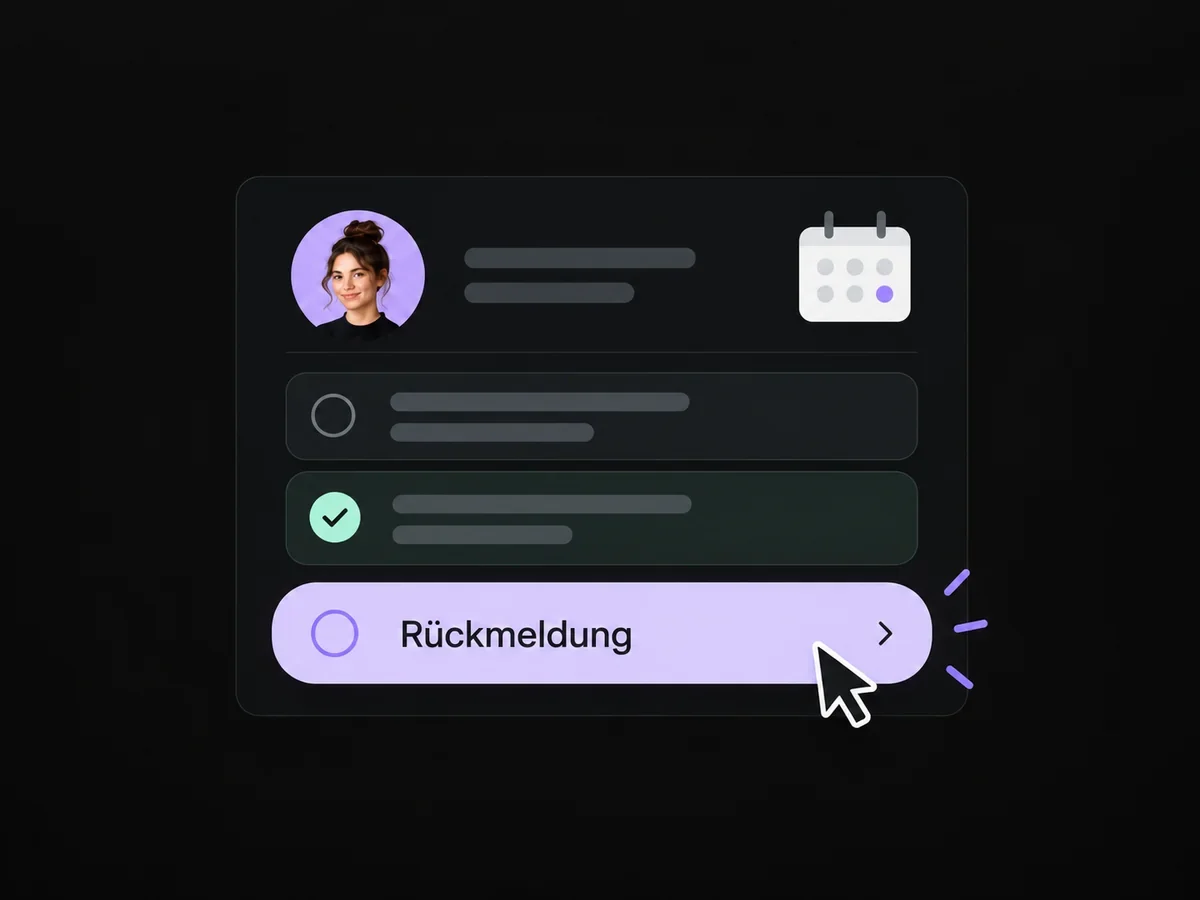
Automation may carry evidence but must not invent meaning
Useful automation starts with an unambiguous event and ends with a verified state:
create an opportunity in the intake stage from a legitimate, uniquely matched enquiry;
create a task or review notice after a confirmed calendar booking;
inspect transition data and notify internally after a filtered stage change;
populate a review queue when a stage-specific age threshold is crossed;
start the separate onboarding process once after an evidenced won status;
visibly stop obsolete tasks or sequences after a backward move.
Risky shortcuts report activity as buyer progress:
email opened → `interest confirmed`;
meeting completed → `solution accepted`;
proposal prepared internally → `proposal under consideration`;
a few days without an update → automatic customer message or lost;
task completed → next stage;
any opportunity belonging to the contact → target of the update.
Stage changes can trigger further workflows, including after manual or backward movements. Every automation therefore needs specific pipeline, from/to, status and, where relevant, owner filters. A general `opportunity changed` trigger is too broad when every field correction produces the same downstream work. Before external communication, read the current business case, latest reply, meetings, suppression state and any result that has already occurred.
What the external survey shows—and what it does not
For its State of Sales, Seventh Edition, Salesforce anonymously surveyed 4,050 sales professionals across 22 countries. Fieldwork ran from August to September 2025 and all respondents were third-party panelists. Germany accounted for 250 respondents. The report covers organisations with at least 21 employees.
Under `Sales Professionals Who Say the Following`, 69% say measurable ROI is more important to customers than last year. Sixty-seven percent say customers require extensive education and 57% say customers take longer to decide than they used to.
Sellers report greater buyer demands and longer decisions
Share of surveyed sales professionals · Anonymous survey August–September 2025; report published 2026
- Measurable ROI is more important than last year69 %
- Customers require extensive education67 %
- Customers take longer to decide57 %
View data table
| Category | Share of surveyed sales professionals |
|---|---|
| Measurable ROI is more important than last year | 69 % |
| Customers require extensive education | 67 % |
| Customers take longer to decide | 57 % |
Three independent self-reports; not parts of a 100% whole and not evidence for an ideal stage count, conversion or forecast accuracy.
Source: Salesforce · State of Sales, 7th Edition · Anonymous survey August–September 2025; report published 2026. 4,050 sales professionals across 22 countries; Germany n=250; organisations with at least 21 employees.
All respondents were third-party panelists. Complete question wording and response logic are not published with the chart. Global vendor self-report, not a dedicated German SME sample, observed deals or a measure of pipeline stages, stage count, forecast, conversion or ONE LOOP. Values shown independently on a 0–100% scale.
The three values are independent statements, not parts of one 100% whole. The report does not provide the complete question wording or response logic at that point. This is global vendor research and self-report, not observed deals or a dedicated German small-business sample.
The chart proves neither an ideal number of stages nor improved conversion or forecast accuracy. It offers narrower context: demonstrating value, educating buyers and supporting longer decisions can represent real buyer work. A pipeline should show the confirmed state of that work. It does not follow that `ROI`, `education` and `decision` must become three stage names.
Salesforce recommends measurable exit criteria and the analysis of transitions and bottlenecks in its pipeline management guide. A separate Salesforce guide to pipeline management and forecasting presents the vendor's own six-stage B2B SaaS model. It is a useful example of explicit definitions, but not a template for a small team to copy.
Translate an existing pipeline before deleting stages
Renaming or removing stages does not change the meaning of historic data. Rebuild in a controlled sequence:
back up the current configuration, stage IDs, status values, automations, reports and open-case counts;
document every old stage with real examples and its prior meaning;
build the target model and contracts in a test environment or copy;
create a mapping table of `old stage → new stage or review`;
search every workflow, filter, form, dashboard and integration for stage IDs or names;
migrate a small set of unambiguous open cases and read them back completely;
place ambiguous cases in an owned review queue;
deactivate or repoint old automation only after the final comparison;
compare counts, values, owners, statuses and active tasks before and after the change;
remove old stages only then.
If deleting a stage moves every contained opportunity into one target column, the mechanism is convenient but only semantically safe when every case genuinely means the same thing. Otherwise, the old ambiguity is simply collected under a new label.
Twelve fictional test cases before the pilot
These are system tests, not measured ONE LOOP results.
Test case | Expected decision |
|---|---|
new form enquiry says only `Please call me` | enquiry accepted; do not claim need or fit yet |
same contact asks about two separate services | two opportunities if decisions and values are genuinely separate |
seller holds an initial call without identifying a clear need | no automatic progression based on meeting activity alone |
buyer confirms a problem and desired outcome | stage 2 may apply when the source and basic fit are documented |
demo finishes while decision criteria remain unknown | stage 3 has not been reached |
criteria, participants and next review are confirmed | stage 3 with evidence and a new next action |
proposal PDF exists internally but has not been delivered | do not move to `Proposal under active consideration` |
buyer receives version 3 and confirms review on Friday | stage 4; retain version, recipient and date |
buyer replies with materially changed scope | justified backward move; stop obsolete proposal automation |
deal remains silent for months after proposal | review pause, close or evidenced return path; do not keep active on hope |
task completes while buyer state is unchanged | stage remains; inspect the task outcome |
lost case returns a year later with a new project | decide whether a new opportunity is more accurate than reopening |
A test passes only when two people select the same stage and the system then shows the correct opportunity ID, status, owner, required data, next action and downstream automation. A green workflow run alone is insufficient.
Metrics require entry cohorts, not an attractive snapshot
A board shows current inventory. Conversion needs a defined cohort and time window. Dividing today's column counts mixes new, old, won, lost and still-open cases.
Metric | Numerator | Denominator or analysis |
|---|---|---|
stage agreement | audited opportunities classified correctly and consistently | all opportunities in the audited sample |
valid entry | entries carrying complete entry evidence | all entries into that stage during the period |
stage conversion | cohort cases reaching the defined target stage or won | all cases entering the starting stage during the period; open cases separate |
stage time | time from valid entry to first valid exit | distribution and median of exited cases, plus age of open cases |
unsupported movement | transitions without required exit evidence | all transitions during the period |
business regression | supported backward movements | all stage movements; data corrections separate |
stale exception | cases beyond the stage threshold without confirmed blocker or future date | all active cases in that stage |
false terminal state | won or lost decisions later corrected | all terminal transitions |
migration remainder | open cases without an unambiguous target stage | all migrated open cases |
pipeline hygiene | active cases without owner, valid stage or next action | all active opportunities at the review point |
Retain absolute counts, period and filters beside every percentage. Assess stage conversion only when the cohort has had enough time to traverse the ordinary process. Do not silently treat open cases as lost or successful. A median can conceal long outliers, so the age of open cases remains visible.
The Sales Stage Analysis in another CRM also separates progression from conversion. This is not a description of ONE LOOP. It supports only the measurement boundary: movement, inventory and closure are different questions.
How ONE LOOP runs a bounded pipeline pilot
Start with one type of sale, a small user group and a bounded set of current opportunities. Write the six stage contracts, mapping table and twelve tests first. Decide which data becomes required at which transition and who owns ambiguous cases. Won, lost, pause and reopening each need their own evidence.
ONE LOOP can connect pipelines and stages, opportunity status, owner, value, custom fields, tasks and internal notifications. New business cases can be created at defined intake points; filtered stage changes and configured inactivity can trigger reviews. The platform does not automatically recognise true buyer progress. Test multiple opportunities per contact, backward movement, trigger filters, re-entry, status, lost reasons, stage changes and result read-back in the actual account.
Use internal notices rather than automated external communication during the pilot. Review invalid stages daily and inspect a sample of evidence weekly. After two complete work cycles, decide which stage is unclear, unnecessary or missing. Version all changes; do not rewrite old cases as though the new definitions had always applied.
CRM or spreadsheet supports the system decision. Lead qualification identifies the information needed before entry. Fair lead distribution defines the owner, and the next-action principle translates the state into concrete work. ONE LOOP can design the pipeline pilot with you.
Conclusion
A small pipeline works when it no longer depends on an oral backstory. Every stage describes an evidenced business state; activities, next actions, status, waiting states and forecast remain separate information. Four open states plus won and lost form a robust starting point, not a universal number. The stage contract determines what matters: entry, exit, required data, owner, return path, age threshold and automation boundary. Fictional edge cases, safe translation of existing data and cohort-based measurement turn an attractive board into an operational sales system.
FAQ